In this article (9 sections)
To track sales from a creator campaign, give every creator a unique coupon code and a tracked link with UTM parameters, then read your store's discount report alongside your analytics. Because many buyers use neither, add a post-purchase survey and compare branded search, direct traffic and orders during the campaign with an earlier period. Together, these three layers give a far more accurate picture than any single method.
This guide explains how to set up each layer, the naming conventions that keep data clean, what each method misses and a simple attribution sheet you can copy. We use "creator" throughout for the people often called influencers.
Why creator sales are hard to track
A typical path to purchase looks like this: someone watches a Reel on the bus, remembers the brand two days later, searches for it on their laptop and buys, possibly on a marketplace. No code was used and no link was clicked. The creator did the work, but a code-only report shows nothing.
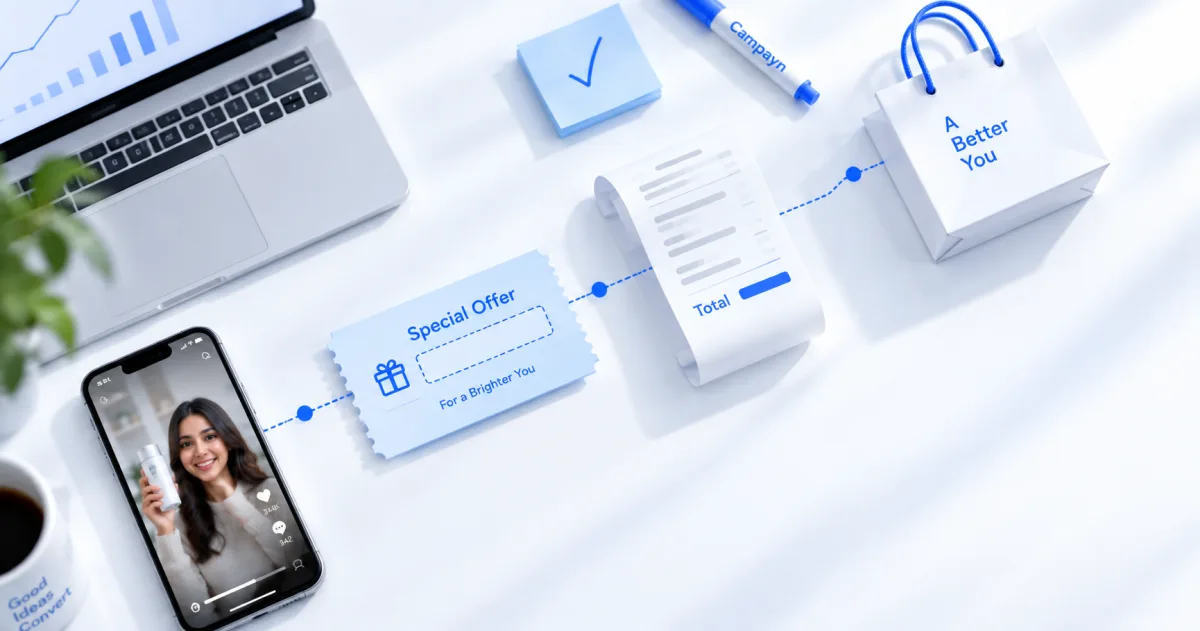
That is why creator attribution needs layers:
| Layer | What it captures | What it misses |
|---|---|---|
| Unique coupon codes | Buyers who enter the creator's code | Buyers who skip codes or use one found elsewhere |
| UTM-tracked links | Visitors who click the creator's link | People who watch, then search or type the URL |
| Surveys and lift comparisons | Delayed and indirect effects | Precision per creator |
Layer 1: Unique coupon codes
How to set them up
- One code per creator. Shared campaign codes make it impossible to compare creators.
- Easy to say and spell. Viewers hear codes in videos, so "PRIYA15" beats "PRY-X7Q".
- A discount worth using. Too small and viewers ignore it; too large and the campaign cannot be profitable. Test the level on your margins before launch.
- An expiry date. A deadline encourages action and keeps the data tied to the campaign period.
- Usage limits, if needed. Per-customer limits reduce abuse on generous offers.
A simple naming convention keeps reports readable:
| Element | Example | Why |
|---|---|---|
| Creator name or handle | PRIYA | Instantly identifies the creator |
| Discount value | 15 | Makes offer tests easy to compare |
| Campaign marker (optional) | OCT | Separates repeat campaigns with the same creator |
| Full code | PRIYA15 or PRIYAOCT15 | Short, spoken easily, unique |
What codes miss
Codes leak. Popular codes get posted on coupon websites and used by people who never saw the creator. Other buyers see the video but forget or skip the code. Treat code redemptions as a lower bound for sales rather than the full picture, and watch for sudden redemption spikes that do not match the creator's posting dates, which often signal leakage.
Layer 2: UTM-tracked links
UTM parameters are tags added to the end of a link so your analytics can identify where a visitor came from. Google's documentation recommends always using three of them, utm_source, utm_medium and utm_campaign, and using utm_content to tell apart different creatives within the same campaign. Parameter values then appear in Google Analytics' traffic acquisition reports.
A naming convention for creator campaigns
| Parameter | What it records | Example value |
|---|---|---|
| utm_source | The platform | |
| utm_medium | The channel type | creator |
| utm_campaign | The campaign | diwali_launch_2026 |
| utm_content | The creator and piece of content | priya_reel1 |
The full link would look like this:
https://www.yourbrand.com/product?utm_source=instagram&utm_medium=creator&utm_campaign=diwali_launch_2026&utm_content=priya_reel1
A few rules keep UTM data usable:
- Use lowercase everywhere. Analytics tools can treat "Instagram" and "instagram" as different sources.
- Decide the convention before launch and share it in the brief, rather than letting each creator improvise.
- Shorten long links with a link shortener so they are easy to use in bios and Stories.
- Put links where viewers can tap them: Story link stickers, the link in bio and YouTube descriptions.
What UTMs miss
UTMs capture only people who click. Viewers who search for your brand later, type your URL or buy on a marketplace are invisible to them. They also depend on the tracked link being used; if a creator mentions your website verbally, most viewers will not type the UTM string.
Layer 3: Estimate what codes and links miss
Post-purchase surveys
Add one question at checkout or on the order confirmation page: "How did you hear about us?" Include an option for Instagram or YouTube creators, and a free-text field so buyers can name the creator. Survey answers regularly surface sales that codes and links missed.
Before-and-after comparisons
Compare branded search volume, direct website traffic and total orders during the campaign with a comparable earlier period. If your campaign targets specific cities, compare orders in those cities with similar cities where no creators posted. The difference gives a rough estimate of the campaign's wider effect.
Marketplace sales
If you sell on marketplaces, watch sales and search trends for your listings during the campaign. Offering a code on your own website as well helps capture at least part of this demand directly.
The attribution sheet
Keep one row per creator, and record numbers on fixed dates, such as 7 and 30 days after posting:
| Creator | Post date | Verified views | Link clicks (UTM) | Code orders | Survey mentions | Attributed revenue | Total cost | Cost per attributed order |
|---|---|---|---|---|---|---|---|---|
| Creator A | ||||||||
| Creator B | ||||||||
| Total |
When a buyer both used a code and clicked a link, count the order once. Decide your rule before the campaign (for example, the code takes priority) and apply it to everyone. Once the sheet is complete, our guide to influencer marketing ROI shows how to turn it into reach and revenue ROI.
How Campayn handles tracking
Campayn's brand dashboard brings campaign views and creator coupon-code tracking into one place, so brands can see cost per verified view and attributed sales side by side for each creator. Codes and links are set up before content goes live, which is when tracking is easiest to get right. For where tracking fits in the full process, see our campaign playbook, and for D2C-specific advice, our guide to creator marketing for D2C brands.
Common tracking mistakes
- Creating codes after content goes live. Early viewers are lost for good.
- Sharing one code across all creators. You can measure the campaign, but not the creators.
- Inconsistent UTM naming. "IG", "Instagram" and "instagram" become three separate sources.
- Judging creators on codes alone. Codes are a floor, not the full effect.
- Ignoring leakage. Redemptions that spike on days the creator did not post usually come from coupon sites.
- Counting the same order twice when a buyer used both a code and a link.
Frequently asked questions
How do you track sales from an influencer campaign?
Give each creator a unique coupon code and a tracked link with UTM parameters, then compare code redemptions in your store's discount report with UTM-tagged sessions and orders in your analytics. Add a post-purchase survey asking how buyers heard about you, and compare branded search and total orders with an earlier period to estimate what codes and links miss.
Should each creator get a unique coupon code?
Yes. Unique codes are the only way to compare creators on sales. A shared campaign code tells you how the campaign performed overall, but not which creators drove results. Keep codes short and easy to say, such as a creator's name plus the discount value, because viewers usually hear codes in videos.
What are the limits of coupon code attribution?
Coupon codes miss buyers who purchase without using a code, and they overcount when codes leak to coupon websites and are used by people who never saw the creator. They also miss marketplace sales where your code does not apply. Treat code redemptions as a lower bound, and combine them with UTM links and post-purchase surveys.
How do UTM links work for Instagram creators?
A UTM link adds parameters such as utm_source, utm_medium, utm_campaign and utm_content to your website URL, so analytics tools can identify the platform, campaign and creator behind each visit. Creators place the link in Story link stickers or their link in bio. Use lowercase, a consistent naming convention and a link shortener.
How do you attribute sales when buyers don't use a code?
Use a post-purchase survey asking how buyers heard about you, and compare branded search, direct traffic and total orders during the campaign with a comparable earlier period. For city-focused campaigns, compare campaign cities with similar cities where no creators posted. These methods estimate the effect that codes and links cannot capture.
How long should creator coupon codes stay active?
Keep codes active for several weeks after content goes live, because many buyers purchase days after watching. A clear expiry date still helps by creating urgency and tying results to the campaign period. Record redemptions at fixed points, such as 7 and 30 days after posting, so creators are compared fairly.
Sources
- Google Analytics Help, "URL builders: Collect campaign data with custom URLs": https://support.google.com/analytics/answer/10917952
Written by Dhairya Raniwal, co-founder and CTO of Campayn.in. He leads Campayn’s engineering and product.
About Campayn.in: Campayn.in is an AI-powered creator marketing platform for Indian brands. Brands launch, manage and measure creator campaigns through one dashboard and pay on a CPV (Cost Per Verified View) basis, with no agency retainer. To plan a campaign, write to contact@campayn.in.