
In this article (8 sections)
Choose an agency if you want a team to own strategy and execution end to end and you can afford a retainer. Choose a creator marketing platform if you want speed, transparent pricing and direct access to your campaign data. Build in-house if creator marketing is a continuous, core channel for you and you can staff it properly. Many brands combine models as they grow, and the right answer usually changes as budget and campaign frequency increase.
This guide compares the three models fairly, including the cases where an agency is the better choice, then gives you a framework and a checklist of questions to ask any partner. We use "creator" throughout for the people often called influencers.
The three models at a glance
| Agency | Creator marketing platform | In-house team | |
|---|---|---|---|
| Who does the work | The agency's team | The platform's software, often with managed support | Your own staff |
| Typical pricing | Retainers, project fees or markups on creator costs | Subscriptions, per-campaign fees or performance pricing such as per view | Salaries, tools and creator payments |
| Speed to first campaign | Moderate: onboarding, then execution | Fast, especially with a pre-vetted creator pool | Slow at first while the team is built |
| Control over creator choice | Shared; the agency recommends | High, depending on the platform | Complete |
| Access to data | Through agency reports | Usually direct, through a dashboard | Complete |
| Strategy and creative input | Strong, if the agency is good | Varies from self-serve to managed | Depends on your team |
| Best for | Large launches, integrated campaigns, brands with no internal bandwidth | Brands wanting measurable, repeatable campaigns without big fixed costs | Brands running creator marketing continuously at scale |
What an agency does, and when it is the right choice
A creator marketing agency plans campaigns, recommends creators, negotiates with them, manages content and reports results. Good agencies bring creative strategy, relationships with larger creators and the capacity to run complex, multi-channel campaigns.
An agency is often the right choice when:
- You are running a large launch that combines creators with PR, events or celebrity talent.
- You need creative strategy, not just execution.
- You have no one internally who can manage creators, even part-time.
- You want access to top-tier talent that works mainly through managers.
The trade-offs are cost and visibility. Retainers create a fixed cost whether or not campaigns run, and when agencies bundle creator fees with their own margin, it can be hard to see what each creator actually cost. Neither is a problem if you go in with clear terms, which is why the questions later in this guide matter.
What a creator marketing platform does
A creator marketing platform uses software to handle some or all of discovery, outreach, briefing, content approval, payments and reporting. Platforms fall along a spectrum:
- Self-serve platforms give you a creator database and tools, and your team runs campaigns.
- Managed platforms combine the technology with a team that runs campaigns for you.
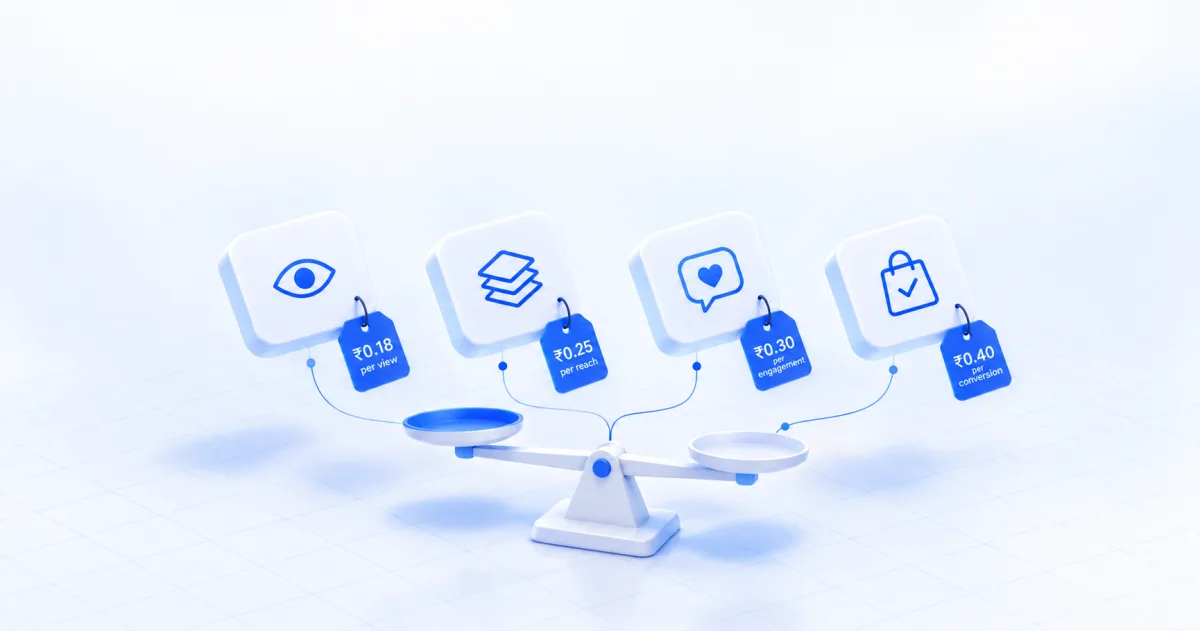
Platforms tend to be faster and more transparent than agencies, because data lives in a dashboard you can see and pricing is often tied to a clear unit, such as a subscription or a per-view rate. The quality of a platform depends heavily on how well it vets creators and verifies results, so ask about both.
When in-house makes sense
Building an in-house team makes sense when creator marketing is a continuous, core channel: you run campaigns every month, work with many creators repeatedly and want relationships held inside the company.
The costs are easy to underestimate. You need people to find, brief, negotiate with and pay creators, review content, handle disclosure compliance and build reports, plus tools for discovery and tracking. Knowledge also becomes concentrated in a few people, so a single departure can set the programme back. Many brands reach in-house only after learning the channel through an agency or a platform first.
A decision framework
Answer five questions, then read across:
| Question | Points toward an agency | Points toward a platform | Points toward in-house |
|---|---|---|---|
| How often will you run campaigns? | A few large campaigns a year | Regularly, from monthly to quarterly | Continuously |
| What is your budget structure? | Room for a retainer | Prefer variable cost tied to results | Budget for salaries and tools |
| Do you have internal bandwidth? | None | Some, for approvals and decisions | A dedicated team |
| What matters most? | Strategy, creative and big-name talent | Speed, transparency and measurable cost | Control and long-term relationships |
| How important is direct data access? | Reports are enough | You want a live dashboard | You want to own everything |
If your answers split across columns, a hybrid is usually right: an agency for a flagship launch, a platform for always-on campaigns, or an in-house lead who manages a platform.
Questions to ask any partner before you sign
- What exactly am I paying for? Ask for pricing by unit: per creator, per deliverable, per view or per month.
- Can I see what each creator was paid or delivered? Transparency here is a strong sign of a trustworthy partner.
- How are creators vetted? Ask what signals are checked beyond follower count.
- How are views and results verified? Ask which platform metrics count and where the data comes from.
- Who owns the content and the creator relationships? Clarify usage rights and whether you can work with the same creators directly later.
- How is disclosure compliance handled? Creators must follow the ASCI guidelines, and brands share responsibility for compliance.
- What reporting will I get, and when? A live dashboard, weekly reports or only a final deck.
- What are the minimum commitments and exit terms? Understand notice periods and what happens to live campaigns if you leave.
Where Campayn fits
Campayn is a creator marketing platform rather than a traditional agency. It combines technology for creator discovery, vetting and measurement (including the Campy Score, Campayn's AI-based creator rating) with managed campaign execution. Campaigns run through one dashboard, and brands pay on a CPV (Cost Per Verified View) basis, with no agency retainer. That makes it a fit for brands that want measurable, repeatable campaigns without a fixed monthly fee, and particularly for brands running creator marketing for the first time.
To understand the model in more depth, see our explainer on CPV in influencer marketing. For how pricing models compare, read CPV vs CPM vs CPE vs CPA, and to see what different budgets deliver, read our startup budget guide. If you are new to the channel, start with our complete guide to creator marketing.
Frequently asked questions
Should I hire an influencer marketing agency or use a platform?
Hire an agency if you need end-to-end strategy, creative direction or access to top-tier talent, and can afford a retainer. Use a platform if you want faster launches, transparent pricing and direct access to campaign data, with costs that scale with campaigns rather than a fixed monthly fee. Many brands use both at different stages.
What does an influencer marketing agency do?
An influencer marketing agency plans creator campaigns, recommends and negotiates with creators, manages briefs and content approvals, handles logistics and reports results. Good agencies also provide creative strategy and access to larger creators. They typically charge retainers, project fees or a markup on creator costs.
What is a creator marketing platform?
A creator marketing platform is software that helps brands find, vet, brief, pay and measure creators. Self-serve platforms provide the tools for your team to run campaigns, while managed platforms add a team that runs campaigns for you. Platforms usually offer faster launches, direct data access and pricing tied to clear units.
When does in-house creator marketing make sense?
In-house makes sense when creator marketing is a continuous, core channel: you run campaigns every month, work with many creators repeatedly and want relationships held inside the company. It requires dedicated staff for discovery, negotiation, content review, compliance and reporting, plus tools, so most brands build it only after learning the channel.
How is a managed platform different from an agency?
Both can run campaigns for you. A managed platform combines a team with its own technology for discovery, tracking and reporting, so brands usually get a live dashboard and pricing tied to clear units, such as per view. An agency relies more on people and relationships and typically reports results periodically.
What should I ask before signing with a creator marketing partner?
Ask what you are paying for by unit, whether you can see what each creator was paid or delivered, how creators are vetted, how views and results are verified, who owns content and creator relationships, how disclosure compliance is handled, what reporting you will get, and what the minimum commitments and exit terms are.
Written by Nitin Pratap Singh, co-founder of Campayn.in.
About Campayn.in: Campayn.in is an AI-powered creator marketing platform for Indian brands. Brands launch, manage and measure creator campaigns through one dashboard and pay on a CPV (Cost Per Verified View) basis, with no agency retainer. To plan a campaign, write to contact@campayn.in.